
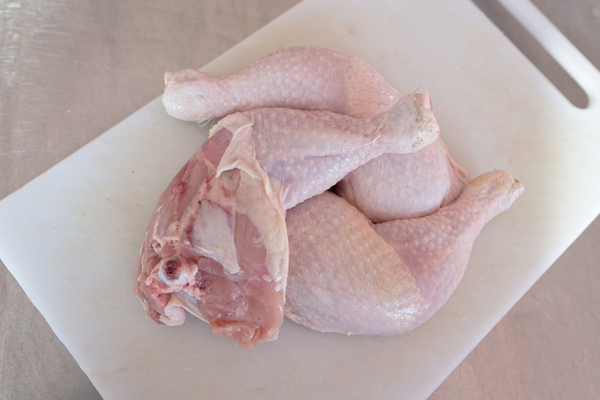
Roasted Turkey in Parts
The easiest, most reliable way to roast a turkey. You get exactly the parts your family loves — no overcooked breast, no dried-out drumsticks, and fewer arguments about “who gets what.”
Serves: 6–8
Prep time: 20 minutes
Cook time: 60–75 minutes
Ingredients
- 4 turkey thighs
- 4 wings
- 3 drumsticks
- 1 bone-in breast, skin removed and reserved
- 3 tablespoons olive oil
- 3 tablespoons butter, melted
- 2½ teaspoons kosher salt
- 1½ teaspoons freshly ground black pepper
- 1 teaspoon garlic powder
- 1 teaspoon onion powder
- 1 tablespoon za’atar
- 1½ teaspoons sumac
- 1½ teaspoons Herbes de Provence
Instructions
- Prep the parts:
Pat all turkey pieces dry with paper towels. Place them on wire racks over sheet pans so air circulates while roasting. - Season:
Mix the olive oil and melted butter. Brush generously over all parts. Combine salt, pepper, and spices in a small bowl and sprinkle evenly over each piece, rubbing gently into the skin. - Cook the skin separately:
Remove the skin from the breast and roast it alone at 375°F for about 15 minutes, or until crisp. You’ll use that golden crackle in your cornbread stuffing. - Roast the turkey:
Preheat oven to 400°F. Place the dark meat (thighs and drumsticks) in the center of the oven and the breast and wings on a separate tray.- Wings: 30 minutes
- Drumsticks: 40 minutes
- Thighs: 50 minutes
- Breast: 60–65 minutes
- Rest:
Let the meat rest for 15 minutes before carving. Slice, arrange, and serve with pan drippings or gravy.
Chef’s Notes
Cooking a turkey in parts is the secret to sanity — everything cooks evenly, and you can tailor the meal to your family. In our house, my son claims the drumsticks, I go for the thighs, and everyone else takes the breast. Still waiting for someone who wants the wings.
If you love the precision of sous vide, turkey breast cooked at 145°F for 3 hours is unbeatable — moist, tender, and carve-ready. But roasting in parts keeps things simple and gives you that irresistible oven-roasted flavor.
About the Spices
The za’atar and sumac really make this dish pop — these are classic Mediterranean spices with a long culinary and medical history. Za’atar adds a nutty, herbal brightness, while sumac brings a lemony tang that balances the richness of the turkey.
If your store doesn’t carry them, you can easily order both online. They’re fantastic on poultry, fish, or roasted vegetables — and I use them in salads and vinaigrettes, too.
Spices and herbs aren’t just for flavor: they’re packed with antioxidants and polyphenols that support your metabolism and mitochondria. Early medicine was built on herbs and spices — and they still nourish us today.
Nutrition & Culinary Medicine Notes
Turkey is an excellent source of lean protein, B vitamins, selenium, and zinc — all crucial for immune function and energy metabolism. Using olive oil along with butter lowers saturated fat while keeping that classic holiday flavor. Breaking down the bird not only improves even cooking, it minimizes waste and maximizes taste.
Mediterranean Diet Points
1 point for lean poultry (dark or white meat).
Nutritional Information (per serving, ~6 oz cooked meat)
- Calories: ~250
- Total Fat: 13g
- Saturated Fat: 5g
- Cholesterol: 95mg
- Sodium: 310mg
- Protein: 32g
The easiest turkey you’ll ever make — tailored to your table, not tradition.